Location
Notting Hill, London, W11Client
BlixtArchitect
Dunnet CravenLedbury Mews, Notting Hill
An office inside a Notting Hill mews…
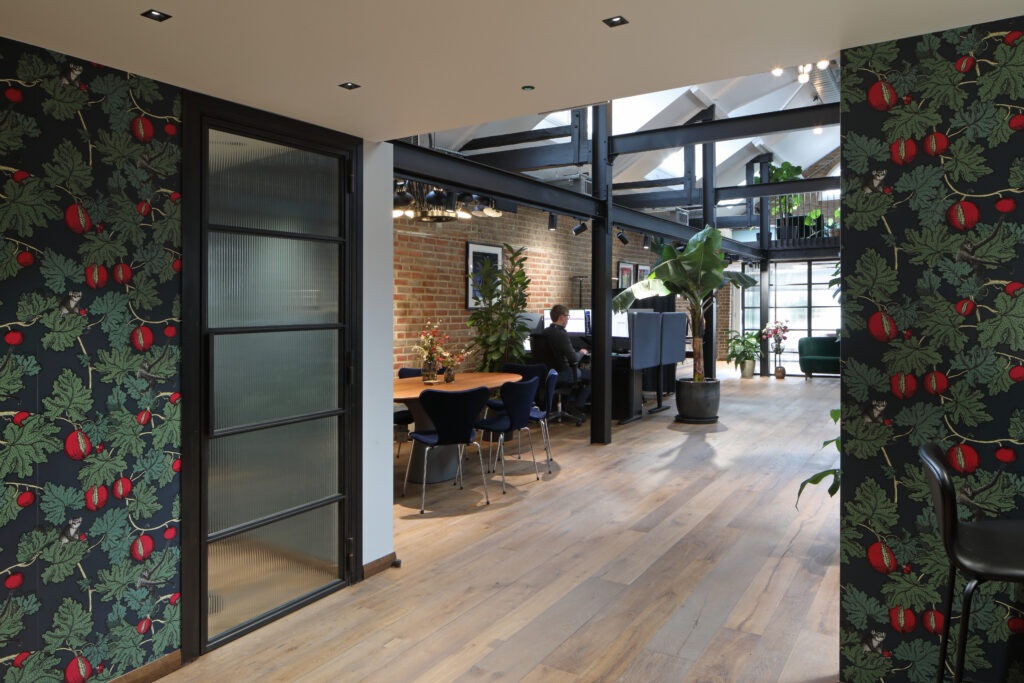
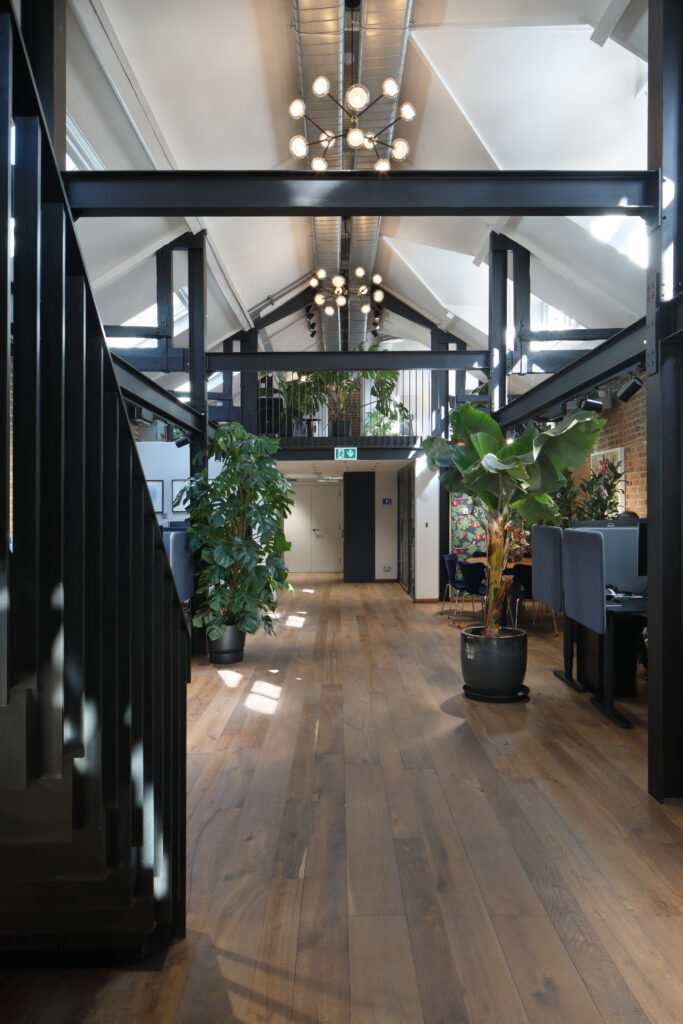
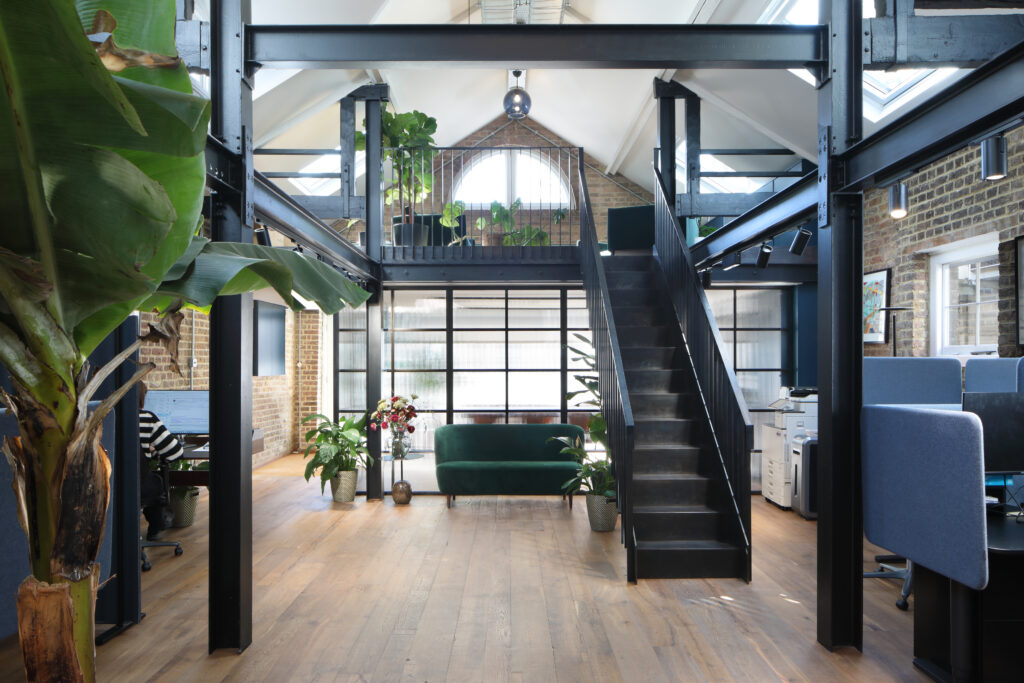
Dunnett Craven turned a steel-framed brick mews building into a characterful London office for Blixt: a double-height main office under the exposed roof trusses, a mezzanine lounge, a glass-walled boardroom and breakout spaces throughout.
We Design For were the MEP engineers, from concept through to construction.
No room for plant, so every service had to earn its place…
A mews building has almost no space for plant, and close neighbours who notice every external unit. An office this size would normally have large floor-standing air handling plant. Here there was nowhere to put it, so we designed the other way round.
- Heat from the floor first. Low-temperature underfloor heating, fed by an air source heat pump, does most of the work through the heating season. Concealed fan coil units only top up on the coldest mornings, and cool the building in summer.
- Fresh air, not conditioned air. A compact air handling unit supplies fresh air only, recovering 86% of the heat from the air it extracts, with CO₂ sensors matching airflow to the number of people in. A small separate heat recovery unit serves the meeting room and lounge only when they’re in use. Choosing this over a full air-conditioning unit removed an outdoor unit, kept the riser small and cut the amount of visible ductwork.
- Cleaner air than the street. The fresh air supply passes through activated carbon filters for nitrogen dioxide and F7 filters for fine particulates.
- Services as part of the architecture. Where ductwork had to be on show, it’s galvanised spiral duct with linear slot diffusers, running the length of the roof ridge. Visible pipework is clad to match.
- Controls that use the cheapest heat first. In winter the roof blinds open and the floor heating meets demand before the air conditioning is allowed to run. In summer the blinds close first. Lighting, blinds and HVAC all run from one control system.
- Water: stainless steel pipework, a metered supply, and automatic shut-off valves in the WCs to stop leaks and waste.
Gas out, carbon down…
The building’s gas supply was disconnected in August 2022, and it now runs on electricity alone. Modelled CO₂ emissions fell from 35.7 to 21.6 kgCO₂/m² a year: around 40% lower than the building before refurbishment.
Fitting modern services into an old building? Talk to us.